
Now Reading: Ancient Egypt Quiz
-
01
Ancient Egypt Quiz

Ancient Egypt Quiz
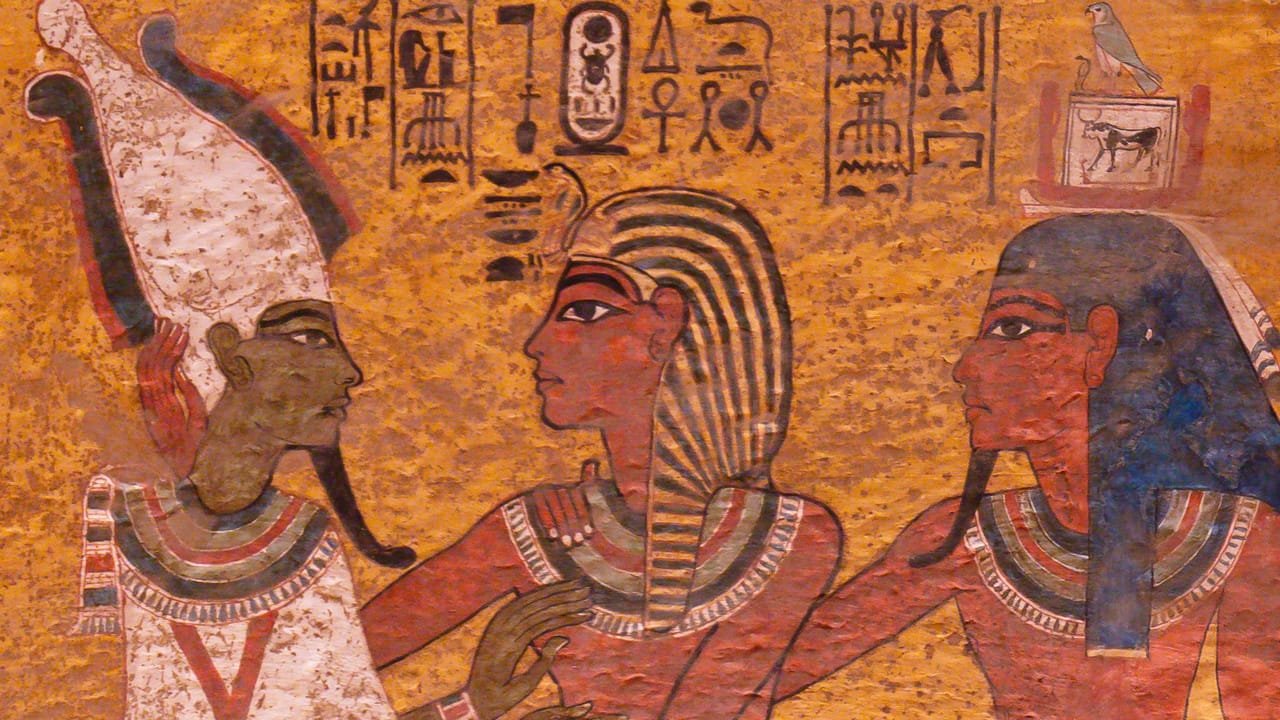
Ancient Egypt was one of the most remarkable civilizations in world history. It developed in northeast Africa and lasted for thousands of years, with the main pharaonic period usually dated from around 3100 BC to 30 BC. Across that long span, Egypt left behind a rich legacy of art, architecture, religion, writing, rulers, and archaeological discoveries. Its influence can still be seen today, and it remains one of the most popular subjects for anyone interested in ancient history.
This Ancient Egypt Quiz is designed as a broad introductory quiz rather than a specialist test. It covers a general mix of topics connected with Egyptian civilization, including its beliefs, geography, famous figures, monuments, and historical legacy. You do not need to be an expert to take part, but a good basic knowledge of the ancient world will definitely help. Some questions are fairly easy, while others are included to make the quiz a little more challenging.
This is intended as a starting point for the topic, with more detailed Ancient Egypt quizzes likely to follow in the future. Ancient Egypt is far too large and fascinating a subject to cover in a single quiz, so future quizzes may explore particular periods, themes, people, or discoveries in more depth. For now, test your knowledge and see how much you know about this extraordinary ancient civilization!
1. Who was the Pharaoh whose tomb was discovered almost intact in 1922?
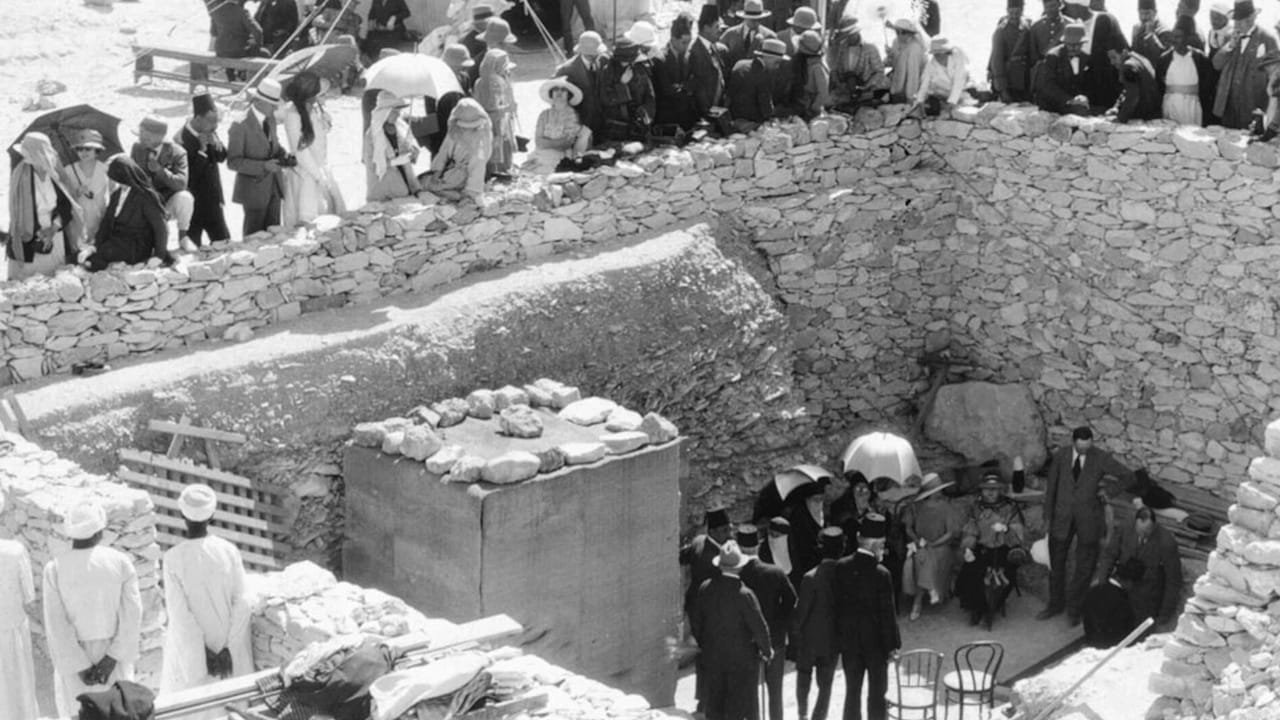
Correct Answer: Tutankhamun
Tutankhamun is one of the most famous pharaohs today, largely because his tomb was discovered almost intact by Howard Carter in 1922. Although he was not one of Egypt’s most powerful rulers, the treasures found inside his tomb gave historians an extraordinary insight into royal burial practices.
2. What was the Rosetta Stone important for?
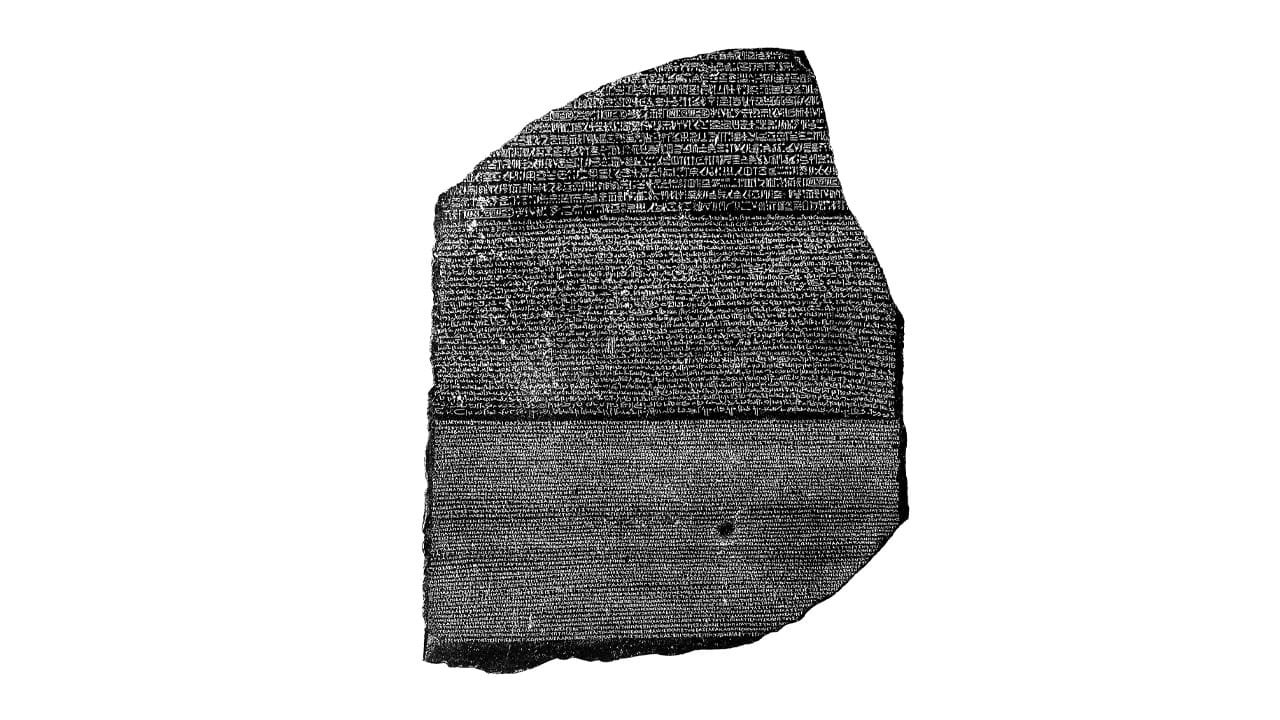
Correct Answer: It helped scholars read hieroglyphics
The Rosetta Stone was important because it contained the same text written in three scripts, including hieroglyphics and Ancient Greek. Since scholars could read Greek, they were eventually able to use it to understand Egyptian hieroglyphics, unlocking much of Ancient Egypt’s written history.
3. Which material did Ancient Egyptians commonly use to make a paper-like writing surface?
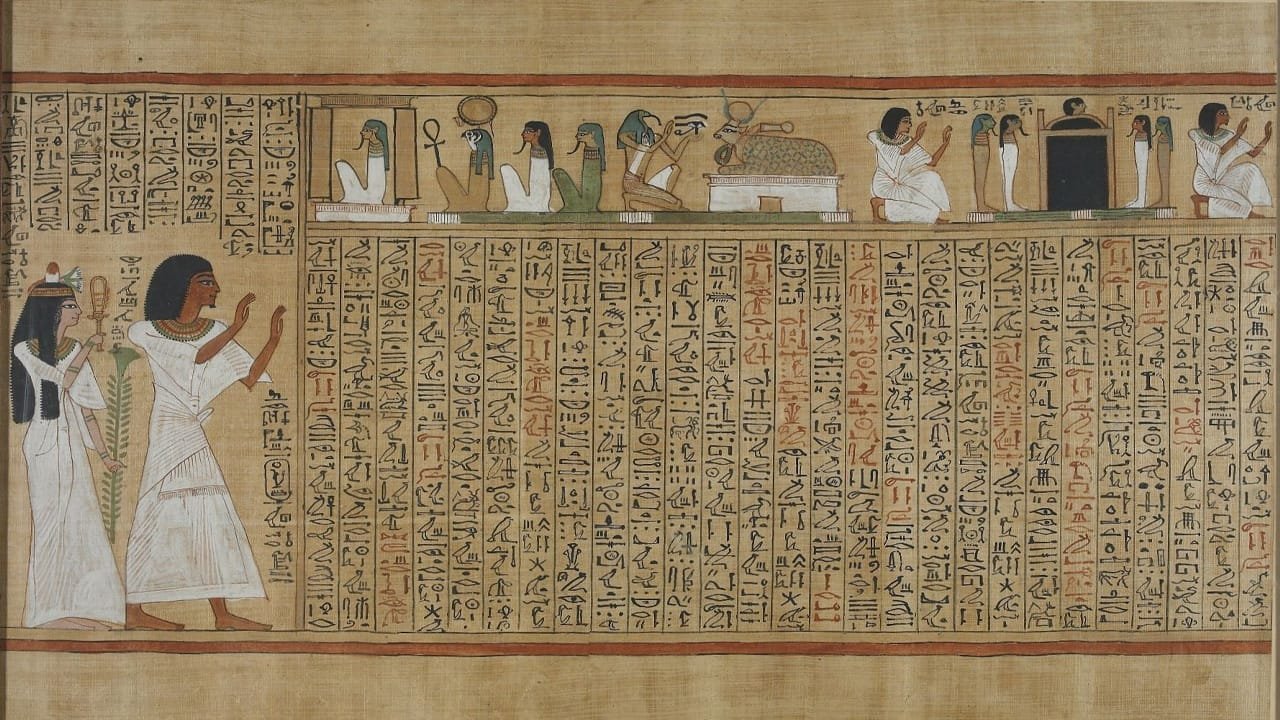
Correct Answer: Papyrus
Papyrus was made from the papyrus plant, which grew along the Nile. Egyptians used it to create a paper-like writing material for letters, records, religious texts, and literature. It became one of the most important writing materials of the ancient Mediterranean world.
4. Which river was essential to the growth of Ancient Egyptian civilization?
Correct Answer: Nile
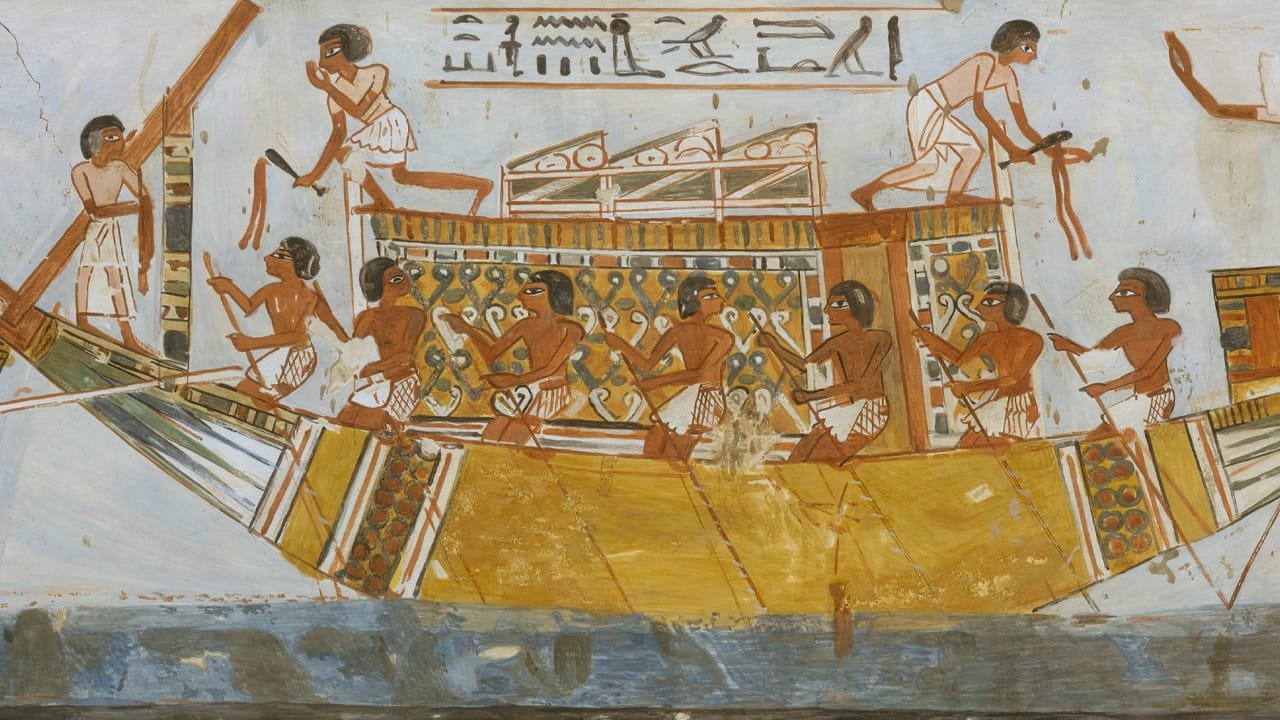
The Nile River was central to life in Ancient Egypt. Its annual flooding left behind rich, fertile soil that allowed crops to grow in an otherwise dry desert landscape. The river also provided water, fish, transport, and a natural route connecting Upper and Lower Egypt.
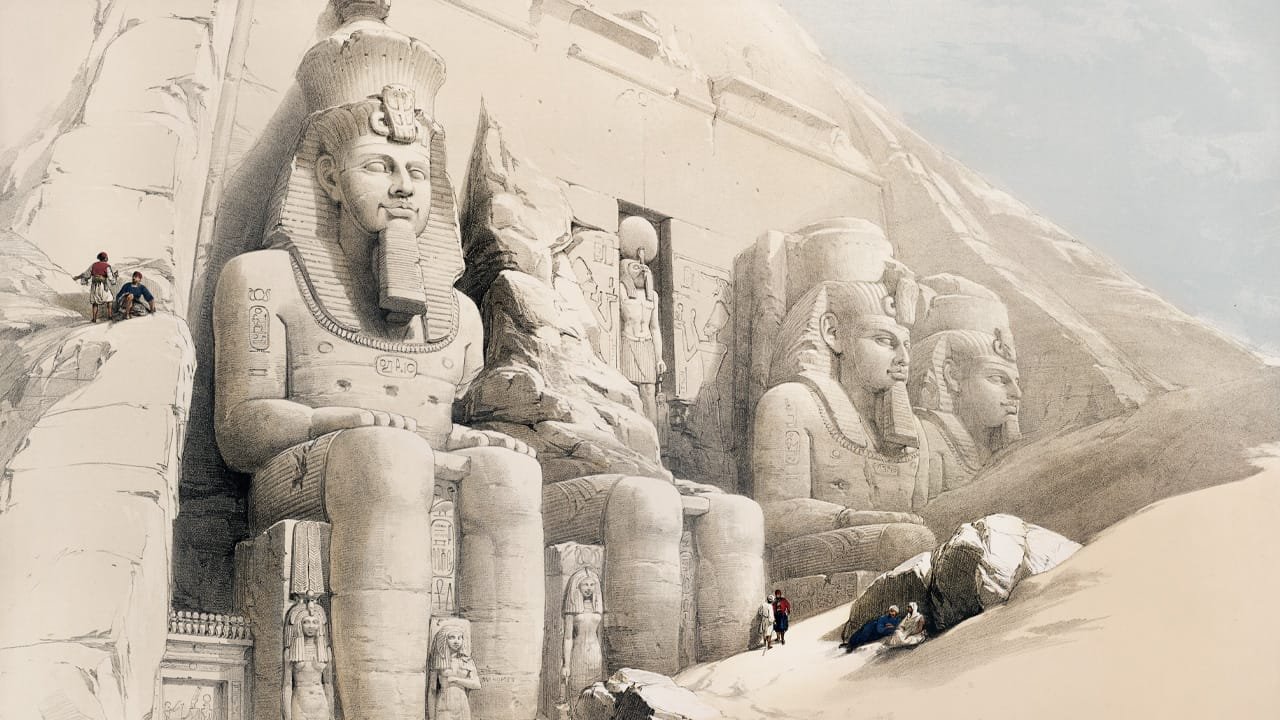
5. Which pharaoh’s temples at Abu Simbel are famous for their huge seated statues?
Correct Answer: Ramesses II
Abu Simbel is one of the most impressive monuments built during the reign of Ramesses II. The Great Temple is famous for the four colossal seated statues of Ramesses carved into its front, each standing around 20 metres tall. Built in southern Egypt near Nubia, the temple was partly designed to show the pharaoh’s power to people approaching from that region. It was also dedicated to major Egyptian gods, as well as to Ramesses himself, reflecting how closely pharaohs were linked with divine authority.
6. What was the writing system used by Ancient Egyptians called?
 Gtoffoletto, CC BY-SA 4.0
Correct Answer: Hieroglyphics
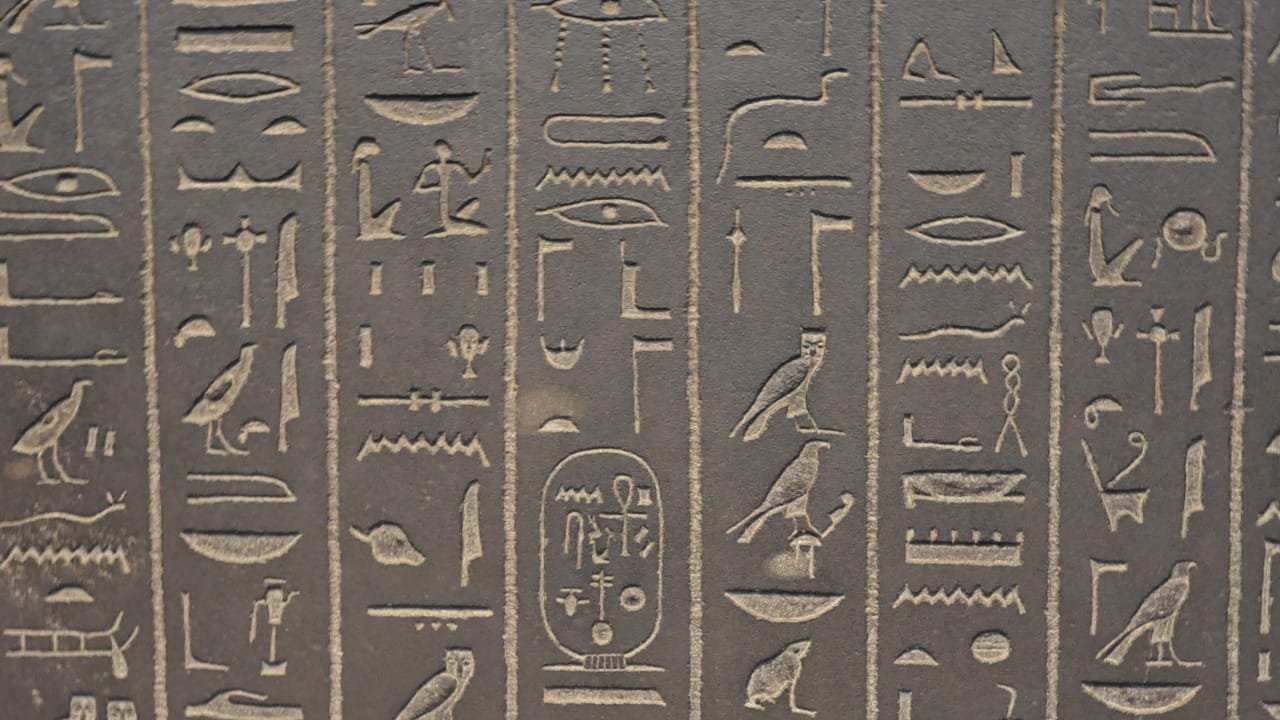
Ancient Egyptians used hieroglyphics, a writing system made up of pictures and symbols. It was often carved into temple walls, tombs, and monuments. Hieroglyphics could represent sounds, words, or ideas, and they played an important role in religion, record keeping, and royal inscriptions.
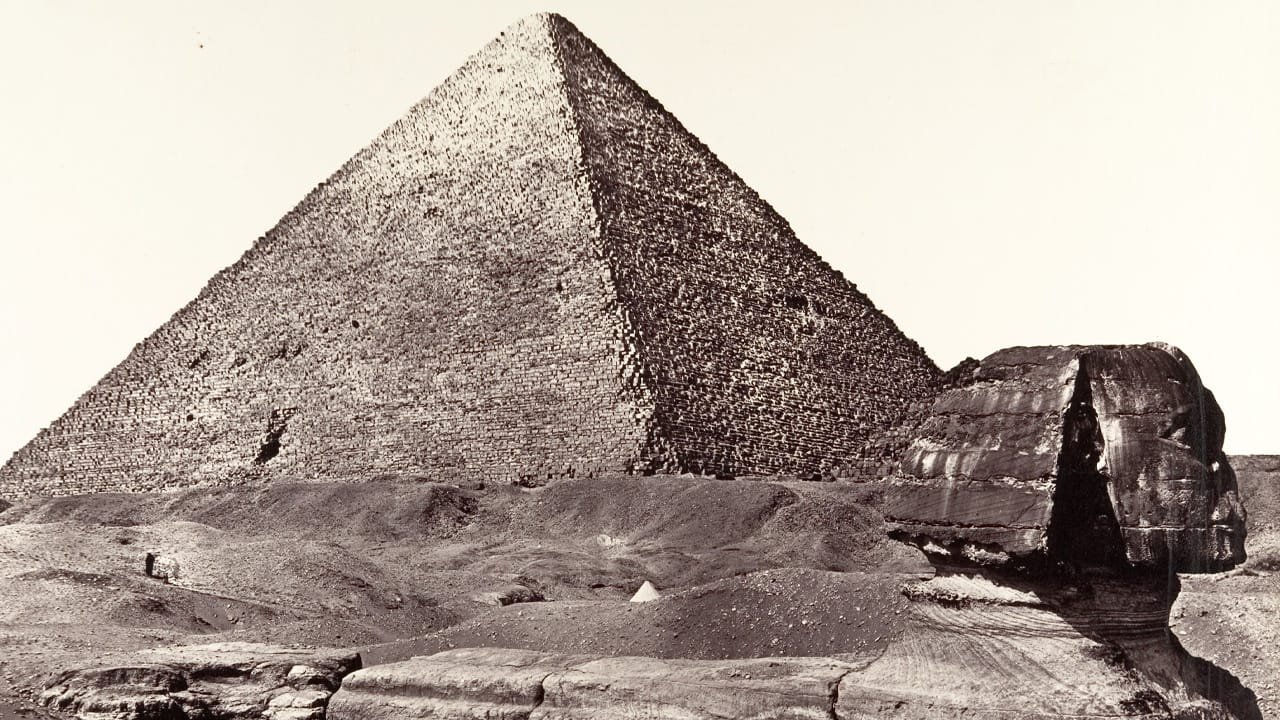
7. The Great Pyramid of Giza served as the tomb for which pharaoh?
Correct Answer: Khufu
The Great Pyramid of Giza was built for the pharaoh Khufu, also known by the Greek name Cheops. It is the largest of the pyramids at Giza and was one of the Seven Wonders of the Ancient World.
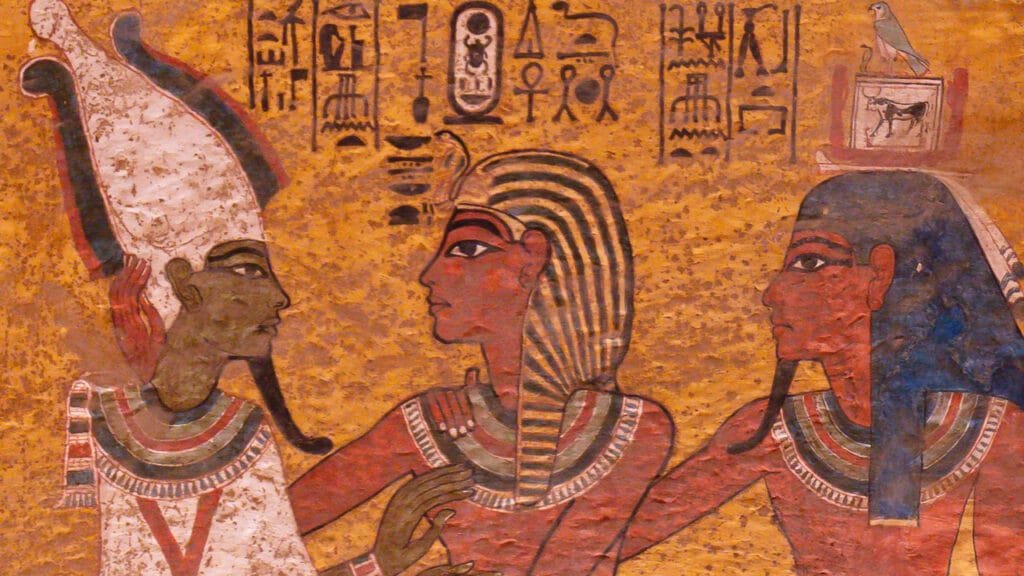
8. Who was the Ancient Egyptian god of the afterlife and the underworld?
Correct Answer: Osiris
Osiris was one of the most important gods in Ancient Egyptian religion. He was closely connected with death, resurrection, and the afterlife. Egyptians believed that the dead would be judged before entering the afterlife, and Osiris was often shown as the ruler of this realm.
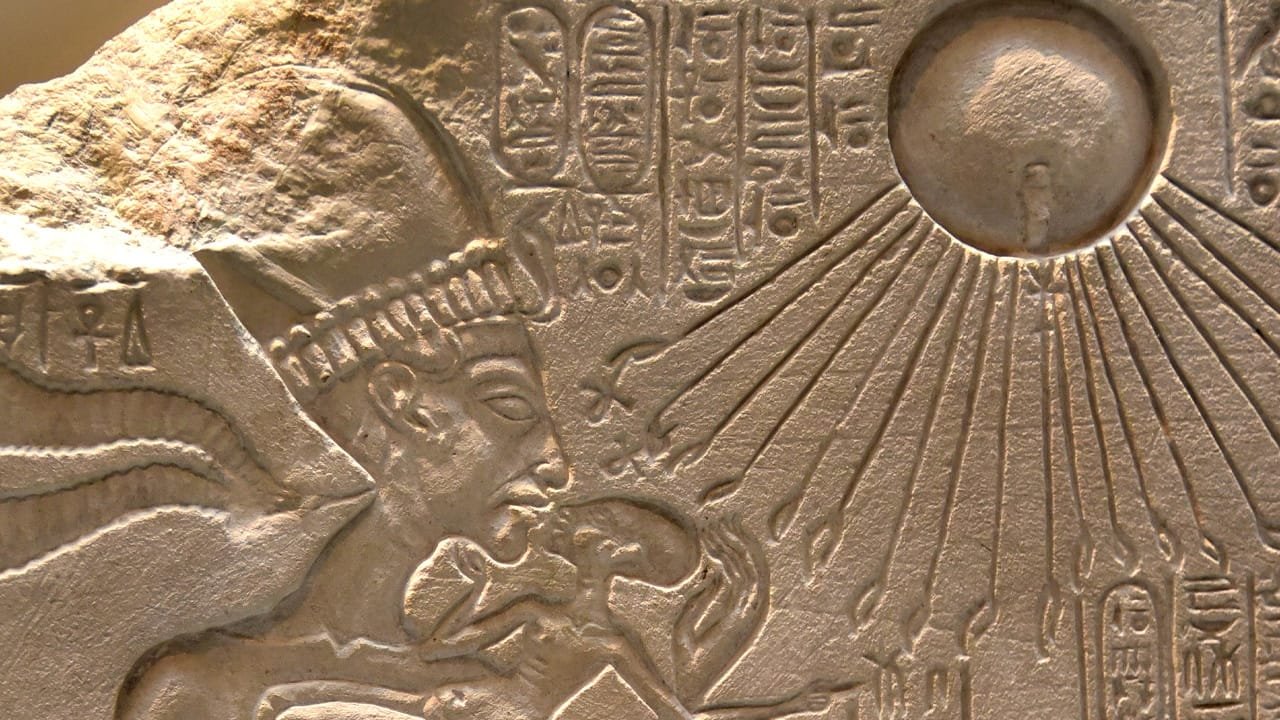
9. Which pharaoh is known for promoting worship of the Aten and changing Egypt’s religion?
 Osama Shukir Muhammed Amin FRCP(Glasg), CC BY-SA 4.0
Correct Answer: Akhenaten
Akhenaten is famous for trying to shift Egyptian religion toward the sole worship of the Aten, the sun disk. This was a dramatic change from Egypt’s traditional worship of many gods. His religious reforms were largely reversed after his death, especially during and after the reign of Tutankhamun.
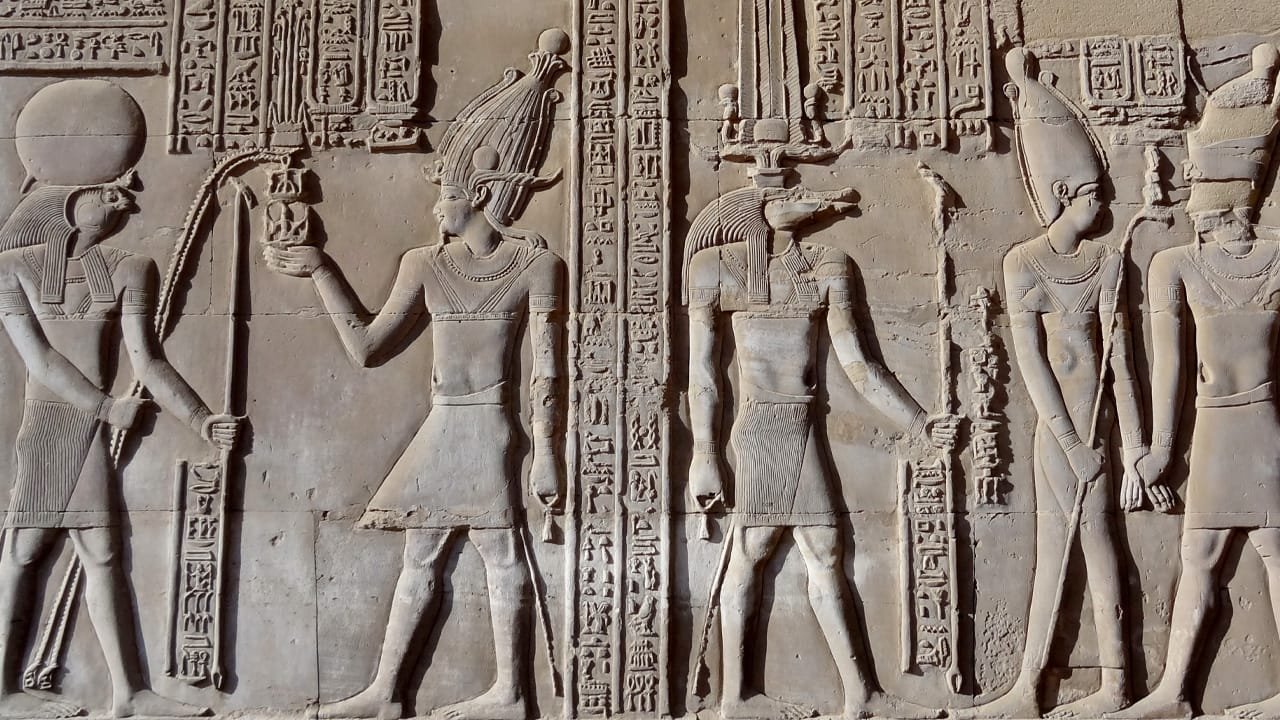
10. Who was the last active ruler of the Ptolemaic Kingdom of Egypt?
 Olaf Tausch, CC BY 3.0
Correct Answer: Cleopatra VII
Cleopatra VII was the last active ruler of the Ptolemaic Kingdom of Egypt. She ruled during a period when Rome was becoming increasingly powerful and formed famous political relationships with Julius Caesar and Mark Antony. After her death in 30 BC, Egypt became a Roman province.
Didn't get 10? Play again and try to get the perfect score!